
2 min read

Why Corporate Mentorship Is Transforming Skills-Based Volunteering

Why Corporate Mentorship Is Transforming Skills-Based Volunteering
4:40

The Evolution of Skills-Based Volunteering

Skills-based volunteering (SBV) has evolved significantly over the past few years. Previously seen as a "nice-to-have" addition to corporate social responsibility (CSR) programs, it has now become a strategic driver of corporate purpose. According to the CECP Giving in Numbers report, the median number of volunteer hours for companies utilizing SBV programs surged to 65,560 in 2022 — a 31% increase in just two years. This dramatic rise indicates a broader shift towards integrating SBV into the core of corporate strategies, aligning employee skills with community needs for maximum impact.

Why Traditional Volunteering Falls Short

While traditional volunteering activities like serving meals or community cleanups provide immediate value, they often fail to create sustained engagement or measurable outcomes at scale. One-off activities can be meaningful in the moment, but struggle to build deep, enduring community relationships. Additionally, traditional volunteering metrics such as hours served and events held don't capture the strategic value of developing workforce skills. In today's job market, where teamwork, communication, and adaptability are essential, career mentorship offers the most direct route to cultivating these competencies in both students and employees.

The Strategic Advantage of Corporate Mentorship

Structured mentorship represents the next frontier in skills-based volunteering, combining the purpose of volunteering with the rigor of leadership development and the reach of digital connection. Unlike traditional volunteering, mentorship reframes volunteering as an exchange of knowledge and experience, not just time. This approach harnesses employee expertise for dual impact: developing leaders inside the company while expanding opportunities outside it. By engaging in mentorship, employees strengthen their social and emotional skills, build inclusive leadership traits, and sharpen their ability to coach others.

Aligning Mentorship with CSR and ESG Goals

Mentorship aligns perfectly with the pillars of modern CSR and Environmental, Social, and Governance (ESG) goals. It develops inclusive leadership and cultural intelligence, supports pipeline-building and reskilling, and enhances employee engagement and retention. Research shows that employees who volunteer through structured programs are more satisfied with their jobs and stay longer. By addressing the social capital gap that holds many students back, mentorship programs democratize access to professional relationships, expanding opportunities regardless of geography or background. This alignment makes mentorship a strategic tool for achieving both corporate and community objectives.

Implementing Effective Mentorship Programs

Transitioning to a mentorship-driven SBV model doesn't require a complete overhaul. Companies can start small by sponsoring a pilot program that connects employees with students or early-career talent. With clear objectives and a defined cohort, CSR leaders can quickly demonstrate engagement and community outcomes. Leveraging platforms like Benevity, YourCause from Blackbaud, and Goodera can help manage employee engagement data and track the success of mentorship programs. These platforms enable CSR teams to capture metrics beyond hours served, including skill development, career advancement, and employee engagement and retention.

Measuring the Impact of Structured Mentorship

To measure the impact of structured mentorship, companies should focus on several key metrics. These include the percentage of employees reporting growth in key competencies, the percentage of mentors who took on new roles or leadership responsibilities, and engagement and retention scores for mentors versus non-mentors. By partnering with mission-aligned organizations such as Historically Black Colleges and Universities (HBCUs) or Minority-Serving Institutions (MSIs), companies can ensure that their mentorship programs expand equitable access to career pathways. This data-driven approach allows CSR leaders to demonstrate a tangible return on purpose (ROP) and create lasting, systemic change.

Structured mentorship is more than just giving back; it's about building forward. By integrating mentorship into corporate volunteer programs, companies can create measurable community impact and drive workforce development, making mentorship the next frontier in skills-based volunteering.

Why Mentorship Is the Next Frontier in Skills-Based Volunteering

Why Mentorship Is the Next Frontier in Skills-Based Volunteering

Skills-based volunteering (SBV) has evolved from a “nice-to-have” into a strategic driver of corporate purpose. Operational data confirms the shift:...

Read More
From Hours to Outcomes: Rethinking CSR Measurement Through Strategic Mentorship

From Hours to Outcomes: Rethinking CSR Measurement Through Strategic Mentorship

The future of corporate social responsibility isn’t about counting hours. It’s about proving outcomes.

Read More
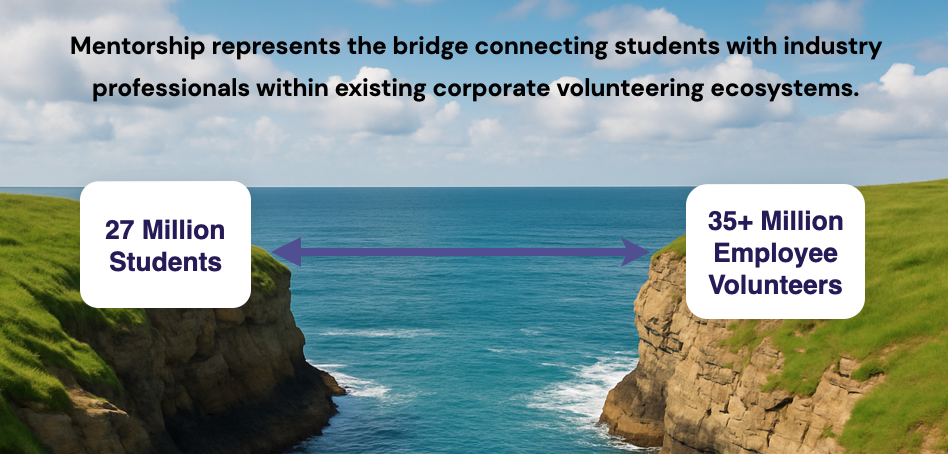
Bridging the Network Gap: How Companies Can Help 27 Million Students Cross the Opportunity Divide

Bridging the Network Gap: How Companies Can Help 27 Million Students Cross the Opportunity Divide

There are approximately 20 million students enrolled in U.S. postsecondary programs, and an additional 7 million individuals are high school juniors...

Read More